
CTE Film I (Period 2) Assignments
- Instructor
- Ms. Alexis Reyes
- Term
- Spring 2020
- Department
- Visual & Performing Arts (VAPA)
- Description
-
This is an introductory course designed to expose students to the elements of film production as an art form as well as film history. Students will learn critical thinking skills as they analyze film and media for creativity and content. Students will learn elements of preproduction, production, and postproduction. Concepts of screenwriting, storyboards, shooting scripts, scheduling, budgeting, production design, cinematography, editing, sound design, scoring and film critique will be covered. Students will work in production crews to produce short digital films.
Files
Upcoming Assignments

No upcoming assignments.
Past Assignments
Due:
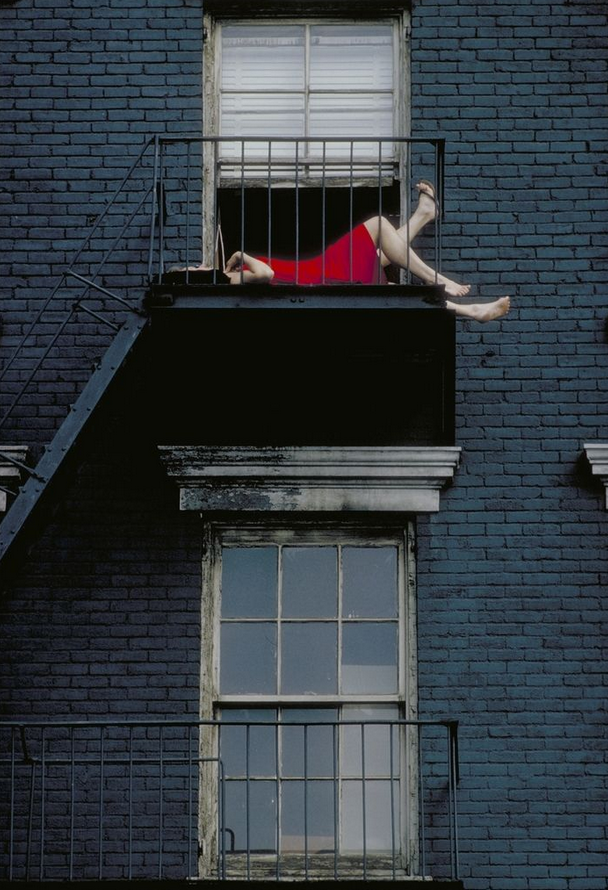
CTE Film I and Film II Final Project
Our final film project is due on June 5th by 3pm. The assignment was inspired by our reoriented relationship with time since we began sheltering in. I know many students have been reverting to their natural sleep patterns and perhaps have finally begun getting enough sleep during the last couple of months. Perhaps students are also beginning to dream differently, literally while sleeping, but also while daydreaming about “reality.”
Here is the stated assignment sent out last week:
Your final project this year is to create a 30 second (or less) film, which explores dream logic and/or an experience of time. The final project must be submitted via email or uploaded to Vimeo or Youtube with link sent to my email by 3pm on June 5th.
All films must include at least one slow motion shot. Films may consist of a single shot, uncut, if you do not have an ability to edit at this time or if you prefer to challenge yourself to create a moving-master-shot (without any cuts). You may also edit shots together into a traditional sequence, if you choose. Regarding sound, films may be silent or may include score (music). If you borrow music from another artist, please try to credit them in some way. If you are unable to create credits, simply email me pertinent info. Please refrain from including dialogue in your films, unless you choose to record non-synch voice-over.
I imagine, your film ideas today may be vastly different than those you were toying around with last week. I challenge you to go with your heart and create something that means something to you.
Joel Meyerowitz, a photographer, shared a promising message to those looking to document our ever-evolving world: “You don’t have to be an artist, you can be any person with a camera and a question.
If you have an impulse, a stray thought that just comes through your mind that triggers a moment of reflection, follow that,” he explained enthusiastically. “Don’t try to intellectualize and think, ‘Oh, I should do this, or I should do that.’ Do the thing that comes like a fragrance.”
Due:
CTE Film I and Film II Assignments and Final Project
CTE Film I and Film II Final Project Due Friday, June 5th by 3pm
In “Meshes of the Afternoon,” Maya Deren delves into dream logic and a state of becoming oneself (metamorphosis). In “La Jetée,” Chris Marker scrambles temporal order (linear time) and pieces together memories of the future. Quarantine and remote learning have caused many of us to re-orient our relationship with both sleep and time.
Your final project this year is to create a 30 second (or less) film which explores dream logic and/or an experience of time.
All films must include at least one slow motion shot. Films may consist of a single shot, uncut, if you do not have an ability to edit at this time or if you prefer to challenge yourself to create a moving-master-shot (without any cuts). You may also edit shots together into a traditional sequence, if you choose. Regarding sound, films may be silent or may include score (music). If you borrow music from another artist, please try to credit them in some way. If you are unable to create credits, simply email me pertinent info. Please refrain from including dialogue in your films, unless you choose to record non-synch voice-over.
Watch “An Open Letter: Portraits and Voices in Quarantine.” http://cchs.ccusd.org/apps/video/watch.jsp?v=270035
In my opinion, you will need to turn off Closed Captioning to fully enjoy the film.
Please email Ms. Reyes a comment about this film by Friday, May 29th at 3pm. Please make the subject of your email, “An Open Letter.” You may discuss individual images you enjoy or the body of work as a whole.
Reminder: I will be at CCHS on Wednesday between 10am and noon at the Huron Gate (off of Braddock Dr.) to receive SD cards and return props and binders to you, if needed. Please email me (if you haven’t already), if you plan to visit campus on Wednesday. Also, please make sure to wear a mask and maintain social distance when you are visiting. I will be in the shade near Mr. Wisner's Ceramics classroom. The gate will remain closed but we have been given permission by CCHS Administration to exchange items through the gate (:
We will resume Zoom sessions this Thursday and Friday for all classes. I will send out a reminder and the Zoom link on Wednesday. Attendance at Zoom sessions is worth participation points. Please live stream your image for full points. In order to maintain a community, we need to see each other.
Covid 19 Silver Lining: I now hear birds chirping in the mornings :>= Ms. Reyes
Due:
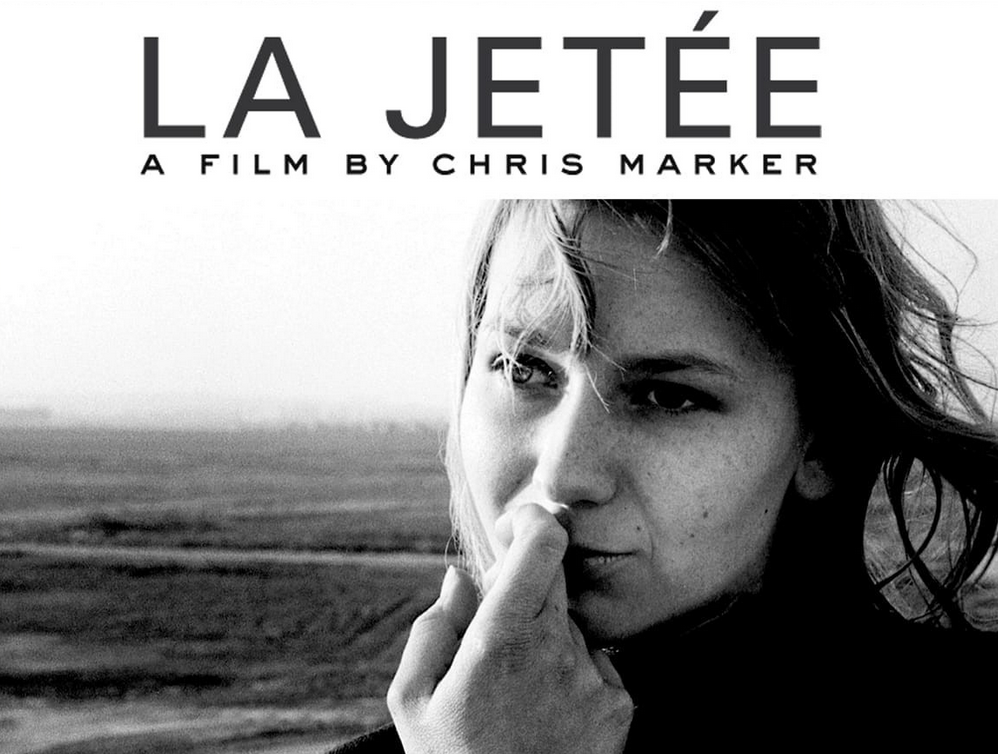
La Jetée by Chris Marker
Film Viewing Assignment
https://vimeo.com/340430995 (in English w/out subtitles)
or https://vimeo.com/309034119 (in French with English subtitles)
or https://vimeo.com/398558010 (in French with English Closed Captioning)
La Jetée, the legendary science fiction film about time and memory after a nuclear apocalypse, was released in 1964 and is considered by many critics to be among the greatest experimental films ever made. (It provided the basis for Terry Gilliam's 1995 film 12 Monkeys and David Bowie’s “Jump They Say.”) Chris Marker, who is the undisputed master of the film essay, composed this post apocalyptic story almost entirely of black-and-white still photographs. The story concerns an experiment in recovering and changing the past through the action of memory, yet the film can be read as a poem dominated by a single moving image, which in its context becomes one of the supreme moments in the history of film.
Chris Marker, filmmaker, poet, novelist, photographer, editor, videographer and digital multimedia artist, challenged moviegoers, philosophers, and himself for years with his complex queries about time, memory, and the rapid advancement of life on this planet. Marker's La Jetée is one of the most influential, radical science-fiction films ever made, a tale of time travel told in still images.
*After Viewing La Jetée by Chris Marker and also last week’s film assignment, “Meshes of the Afternoon” by Maya Deren and Alexander Hammid, please send me an email entitled TIME TRAVEL. No content is necessary.
Further viewing (required)
Mira Nair on La Jetée
https://vimeo.com/281289405
Further reading (optional)
Thrilling and prophetic: Why Film-maker Chris Marker's Radical Images Influenced So Many Artists
https://www.theguardian.com/film/2014/apr/15/thrilling-prophetic-chris-marker-experimental-films?CMP=share_btn_link
Further viewing (optional)
Remembering Chris Marker
https://vimeo.com/50283533
Due:
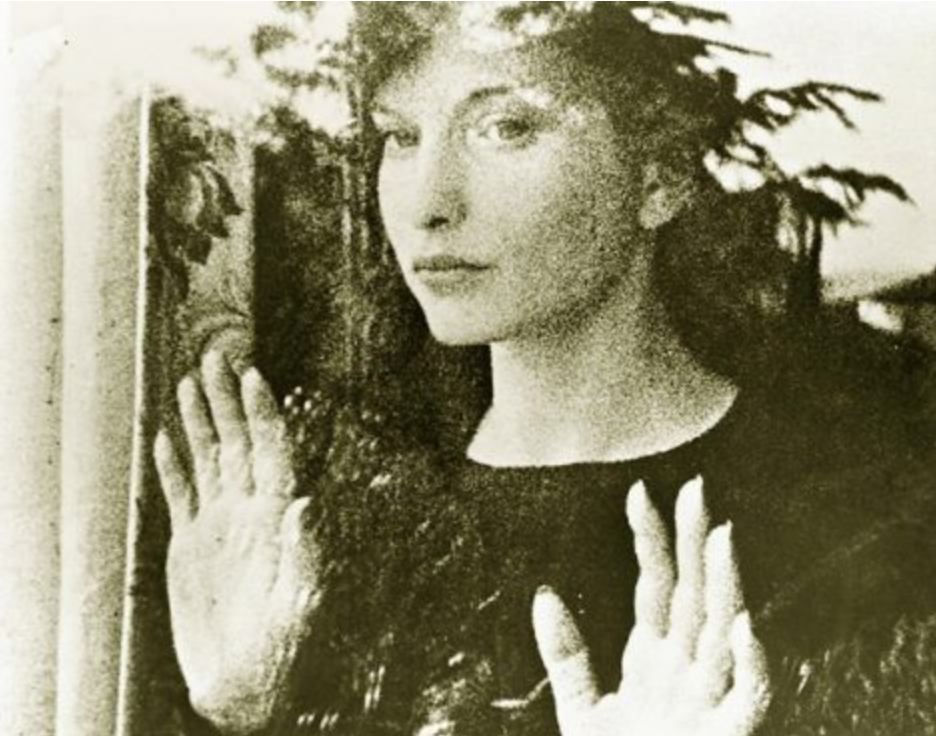
"Meshes of the Afternoon" by Maya Deren
Kanopy Film Viewing Assignment
Please watch “Meshes of the Afternoon” by Maya Deren and Alexander Hammid
https://lacounty.kanopy.com/video/masterworks-american-avant-garde-experimen-0
Further reading (optional)
https://www.moma.org/learn/moma_learning/maya-deren-meshes-of-the-afternoon-1943/
Further viewing (optional)
“Meditation on Violence” by Maya Deren
https://lacounty.kanopy.com/video/masterworks-american-avant-garde-experimen-0
Further viewing (optional)
In the Mirror of Maya Deren: An Innovative Avant-Garde Filmmaker by Martina Kudlacek
https://lacounty.kanopy.com/video/mirror-maya-deren
Due:
Letter to Self Audio Recording Assignment Due Friday May 8th at 3pm
Audio recording Assignment Due Friday May 8th at 3pm:
Record the “letter to yourself” you wrote and email audio recording to me. Please note: you can edit the original letter if you decide you do not want to reveal something to your peers or if your ideas or sentiment have changed.
Begin recording of the letter with the words “Dear Alexis (please insert your own name).” Then read your letter. You can sign off any way you want J
Use the Voice Memos app on your iphone
Watch this video for easy Voice Memo app instructions: https://vimeo.com/83811743
*disregard the fact that you are not on a phone being interviewed…
Android phones don’t always come with a voice memo app already installed, but there are plenty of good options in the Google Play store, such as ASR Voice Recorder, or Easy Voice Recorder.
Instructions:
After recording, click on file name and change file name to be your First and Last name
Hit elipses (…) to send
Hit share (box with up arrow)
Choose Mail
Email to [email protected]
More Tips on using your phone to record audio:
Sit in a quiet place (not the bathroom as it has too much echo)
DO NOT tap fingers or wear clothing that makes noise if moved
If your letter is printed on a sheet of paper make sure you set the paper down (or read off of a computer screen) so we cannot hear you holding or moving the paper
Drink a glass of water before recording so your mouth does not sound dry
DO NOT sit near traffic or any device that generates white noise (refrigerator, window near traffic or birds, TV, computer fan, printer, fountain or source of water, etc.)
Place your phone on a table (ideally at mouth level) with the mic towards your mouth – DO NOT hold phone in your hand while recording
Due:
Assignment
Due:
CTE Film I and Film II Assignments for the Week of April 27 ~ May 1, 2020
CTE Film I and Film II Assignments for the Week of April 27 ~ May 1, 2020
Sign up for Kanopy to watch films via the LA County Library: https://lacountylibrary.org/
Kanopy can be found under the DIGITAL LIBRARY tab in the left hand column (near the bottom).
If you have a LAPL library card, then use the number on your card to sign up for Kanopy permanently (for free).
If you do not have a LAPL library card, then you must first create a digital library card (valid for 90 days). Use the link found under the DIGITAL LIBRARY tab in the left hand column (under EXPLORE) named “Digital Library Card.”
Please send me an individual email when you have successfully signed up for Kanopy (DO NOT REPLY TO THIS EMAIL).
Watch the following 3 films on Vimeo prior to our Zoom Meeting:
“Thrush” by Gabriel Bisset-Smith and Graham Turner 2010 (04:28)
“Bär” by Pascal Floerks 2014 (08:14) *You must click the CC (closed captioning) button to see captioning in English
“Portraits from a Storm” by Peter Jordan 2011 (03:48)
Due:
Assignment
April 20, 2020
Hello from the Inside,
We discussed and studied practical lighting last week. You watched three videos and we discussed color temperature and three-point lighting in our Zoom class (refer to the Zoom agenda, if you missed class).
This week your task is to take a portrait of yourself or a family member using practical light(s). In your photograph, light should be thoughtfully employed and the image should tell a story.
Note: Do not submit a thoughtless selfie. If you choose to use yourself as the subject, please set up the shot using a stand-in actor and then when you are ready to take the photo of yourself, ask someone else to hold the camera/phone and shoot.
For inspiration, take a look at these portrait artists.
John Edmonds Anonymous
https://www.lightwork.org/archive/john-edmonds-anonymous/
Jill Greenberg Baby Don’t Cry
https://mymodernmet.com/baby-dont-cry-jill-greenberg/
Carrie Mae Weems The Kitchen Table Series
http://carriemaeweems.net/galleries/kitchen-table.html
Endia Beal Am I What You’re Looking For?
https://www.bjp-online.com/2017/04/endia-beals-am-i-what-youre-looking-for/
Cindy Sherman Untitled Film Stills (scroll down to the bottom of the web page to look at Untitled Film Stills #1through #83)
https://www.moma.org/artists/5392?locale=en&page=1
Please email/share your photograph with me by Friday at 3pm. You can take your photograph with any camera or phone. Thanks!
p.s. Last week, many of you only signed up for one or the other of the website subscriptions. If you notice in Aeries that you are missing points for one of these two assignments, please go back in to the CCHS teacher home pages and subscribe to both my Alexis Reyes teacher home page and your specific class period.
p.p.s. I will be taking attendance during this week’s Zoom session on Thursday or Friday depending on your period. I will send out the invitation/link on Wednesday.
Participation in your class Zoom meeting is worth points this week.
p.p.p.s. Hello (from the Inside) An Adele Parody by Chris Mann is very funny, if you haven’t seen it yet.
Due:
Assignment
Please watch the following 3 short videos prior to our Zoom meeting this week. Thanks! Ms. Reyes
Using practical lights
(during a global pandemic because you have no other option)
DIY / Indie tutorial from PremiumBeat (Authored by UglyMcGregor)
https://www.youtube.com/watch?v=ISWsKQsdkl0&
Takeaways:
- Avoid a single surface plane or flat space – pick your location to add depth
- Directional lamps can be easier to use
- You can also use a cheap dimmer like this one
- Further reading
Indie Film Hustle discussion about Kubrick (John Alcott, DP and Lou Bogue, gaffer)
https://indiefilmhustle.com/practical-lighting-stanley-kubrick/
(1st video by Entertain the Elk)
Takeaways:
- Fire, candles, car headlights, string lights & more can all be practical light sources
- Don’t be afraid of letting your actors travel into the dark
- Further reading on that same page linked above
CookeOptics interview with Bradford Young (DP for Solo, Arrival, Selma, etc.)
https://www.youtube.com/watch?v=npawRSk5tiw
Takeaways:
- Fast film, good digital cameras and fast lenses allow you to create with fewer big lights
- Built a production light out of a practical – put it in a box and moved around to match Gaffer mentioned is Christian Epps
- Small footprint
- Any wall you don’t see – put black on it (including floor / ceiling)
Due:
Assignment
Due:
Assignment
Letter to Self - Assignment due Friday, 4-10-20 (by midnight)
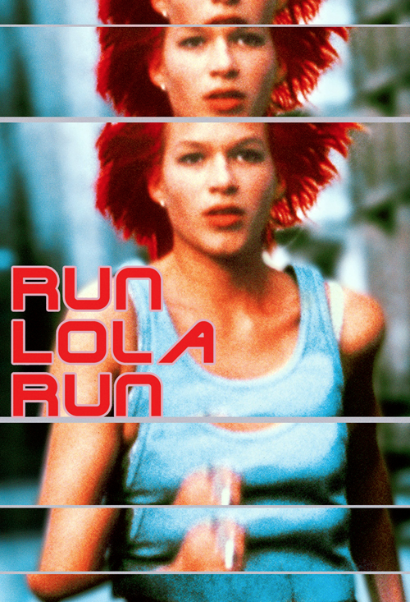
Before we began distance learning, we watched Run Lola Run* (1998).
It is the third film from Tom Tykwer, and unlike many German films, it managed to find both critical and commercial success around the world.
The film is an example of the post-modern idea that the world may be seen in different perspectives. Life is an assortment of states that are dependent on their relation to other states. There is no one destiny, only many possibilities. In the film, Lola has no logical plan because she is just a person trapped in conflicting circumstances that require her to act. Lola experiences the same event with dramatically different outcomes. When Lola changes her choices, she changes the outcome for herself and for other people, thus the story has many endings.
Write a ½ page single-spaced (font size 12) letter to yourself about your situation now and how you plan to live your life for the next two weeks safely and creatively. How will you get some of the things you want? Like Lola, you’re in a difficult situation beyond your control. And like Lola, you have to make choices. Identify the choices you plan to make and actions that you plan to take to determine your own future two weeks from now.
*You do not need to have seen Run Lola Run to do this assignment.
Due:
Assignment
SOCIAL DISTANCING ASSIGNMENT
March 16, 2020
Dear Filmmakers,
First let me say that I miss you.
CTE Film 1 students, I wish we were still in school shooting Day 4 of our ROYGBIV films. And Film 2 students, I wish we were still pushing forward with our documentaries and our fight sequence/sound design project.
Between the rain and Covid-19 anxiety last week, you were all doing a great job.
However, this week is different. This week we will be communicating via email. I want to keep it simple at first and may add different ways to communicate if school remains closed beyond April 5th.
Since we are not physically at school and you are being given the opportunity to create art outside of school, I think it is a great time to document our evolving daily lives off campus.
Here is your assignment for March 17. It is due via email on March 20th before midnight. Your grade on the 100pt assignment will go down by a letter grade each day it is late.
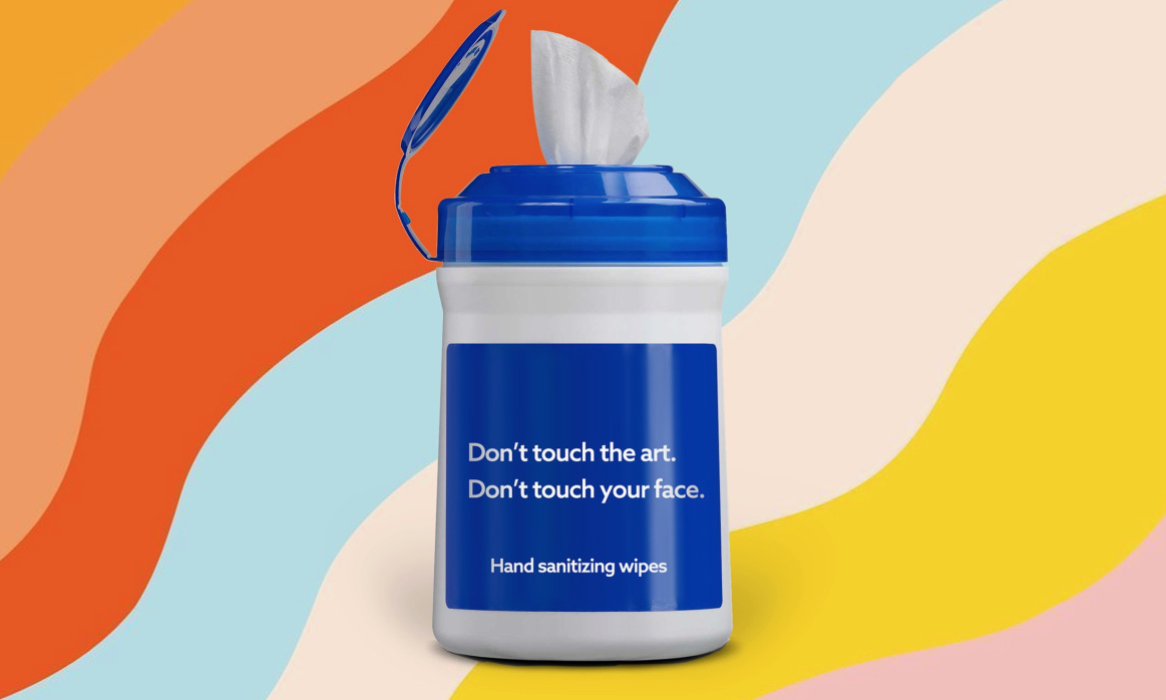
Please create an art piece in response to the concept of “social distancing.”
Social distancing in the age of Covid-19 is currently being recommended by the CDC. Epidemiologists are using the term to refer to a conscious effort to reduce close contact between people and hopefully stymie community transmission of the virus.
But what exactly does “social distancing” look like for a young adult trying to go about their life while staying healthy and helping keep the people around them healthy? Even detailed instructions are difficult to sift for actionable advice. Here are some hypothetical questions: If I have a friend from another high school whom I haven’t seen in awhile, can I have them over to our house? If I’m invited to a “kick back” amongst close friends, should I pass? Can I kiss, hug and wrestle with my little cousin who is also babysat by my grandma? How about my relative’s wedding in two weeks in another state, is it too late to cancel? If we’re on lockdown, can I walk to my friend’s apartment when I feel sad? If I end up officially quarantined, can I walk around the park at night for some fresh air?
Have you encountered some version of these ethical questions in the last few days? What does this brave new world look like? Feel free to document real events or fictionalize an imagined scenario in your art.
Thoughtful responses will be accepted in one of the following media (your choice):
- 3 photographs (taken with any type of camera or phone)
- 30 seconds or less of video, with or without sound (please email a link to your video on YouTube or Vimeo or simply email a .mov using Mail Drop)
- 3 paragraphs (12pt, single spaced font)
- 3 frame storyboard sketched (scan and email or take a pic of each storyboard frame and email from your phone)
Be prepared to share your art or writing with fellow students and the CCHS community in a virtual gallery. Please follow the Culver City High School Video Production Content Agreement in your art. Failure to abide by these rules will result in the loss of class credit for the project.
If you have any questions, please email at any time.
With the deepest respect for your ideas,
Ms. Reyes
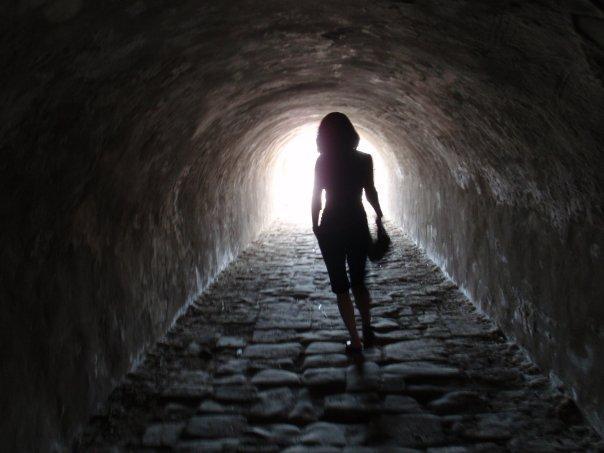
Attached Image by Quinn Fenlon. Photo by Ann Marie Lonsdale from the deYoung Museum.
Due:
Assignment
SOCIAL DISTANCING RUBRIC
ASSIGNMENT:
Please create an art piece in response to the concept of “social distancing.” Social distancing, in the age of Covid-19, is currently being recommended by the CDC. Epidemiologists are using the term to refer to a conscious effort to reduce close contact between people and hopefully stymie community transmission of the virus.
But what exactly does “social distancing” look like for a young adult trying to go about their life while staying healthy and helping keep the people around them healthy? Even detailed instructions are difficult to sift for actionable advice. Here are some hypothetical questions: If I have a friend from another high school whom I haven’t seen in awhile, can I have them over to our house? If I’m invited to a “kick back” amongst close friends, should I pass? Can I kiss, hug and wrestle with my little cousin who is also babysat by my grandma? How about my relative’s wedding in two weeks in another state, is it too late to cancel? If we’re on lockdown, can I walk to my friend’s apartment when I feel sad? If I end up officially quarantined, can I walk around the park at night for some fresh air?
DRIVING QUESTION:
Have you encountered some version of these ethical questions in the last few days? What does this brave new world look like?
Feel free to document real events or fictionalize an imagined scenario in your art.
|
Critical Thinking & Creativity Rubric |
Below Standard (14 pts) |
Approaching Standard (16 pts) |
At Standard (18 pts) |
Above Standard (20 pts) |
|
Analyze Driving Question & Gather Information |
· Is unable to integrate information to address the Driving Question; gathers too little, too much, or irrelevant information, or from too few sources. |
· Attempts to integrate information to address the Driving Question, but it may be too little, too much, or gathered from too few sources; some of it may not be relevant. |
· Integrates relevant and sufficient information to address the Driving Question, gathered from multiple and varied sources. |
|
|
Generate & Select Idea |
· Does not ask new questions or elaborate on the selected idea
· Reproduces existing ideas; does not imagine new ones |
· Asks a few new questions but may make only minor changes to the selected idea
· Shows some imagination when shaping ideas into a product, but may stay within conventional boundaries |
· Asks new questions, takes different perspectives to elaborate and improve on the selected idea
· Uses ingenuity and imagination, going outside conventional boundaries, when shaping ideas into a product |
|
|
Define the Creative Challenge |
· May just “follow directions” without understanding the purpose for innovation |
· Understands the basic purpose for innovation. · Attempts innovation. |
· Understands the purpose driving the process of innovations. · Succeeds at innovation in product. |
|
|
Present Work |
· Presents ideas and products in typical ways |
· Adds some interesting touches to presentation of media · Attempts to include elements in presentation that make it more lively and engaging |
· Creates visually exciting presentation of media · Includes elements in the presentation that are especially lively, engaging or powerful to the audience |
|
|
Self-Evaluate Imagery or Writing |
· Does not evaluate quality in work before submission. Includes in product with typographical errors, misspellings, formatting issues, or incomplete ideas · Or includes imagery without thought to style or standards in the film Industry, i.e. out of focus, poor framing, shaky camera (not stabilization of camera), shifting color balance, etc. |
· Understands that the quality of information should be considered, but does not do so thoroughly. · Some attention to style or film standards in work. |
· Thoroughly assesses and submits only high quality imagery or writing in product. · Very few typographical errors, misspellings or formatting issues. Ideas are complete. Or, if submitting images, includes imagery with very few quality issues i.e. controlled focus, assured framing, no shaky camera (without reason), no shifting of color balance, etc. |
|
|
Total Score
|
|
|
|
|